

Little Princess Trust News
Working on a way to deliver immunotherapy directly to brain tumours
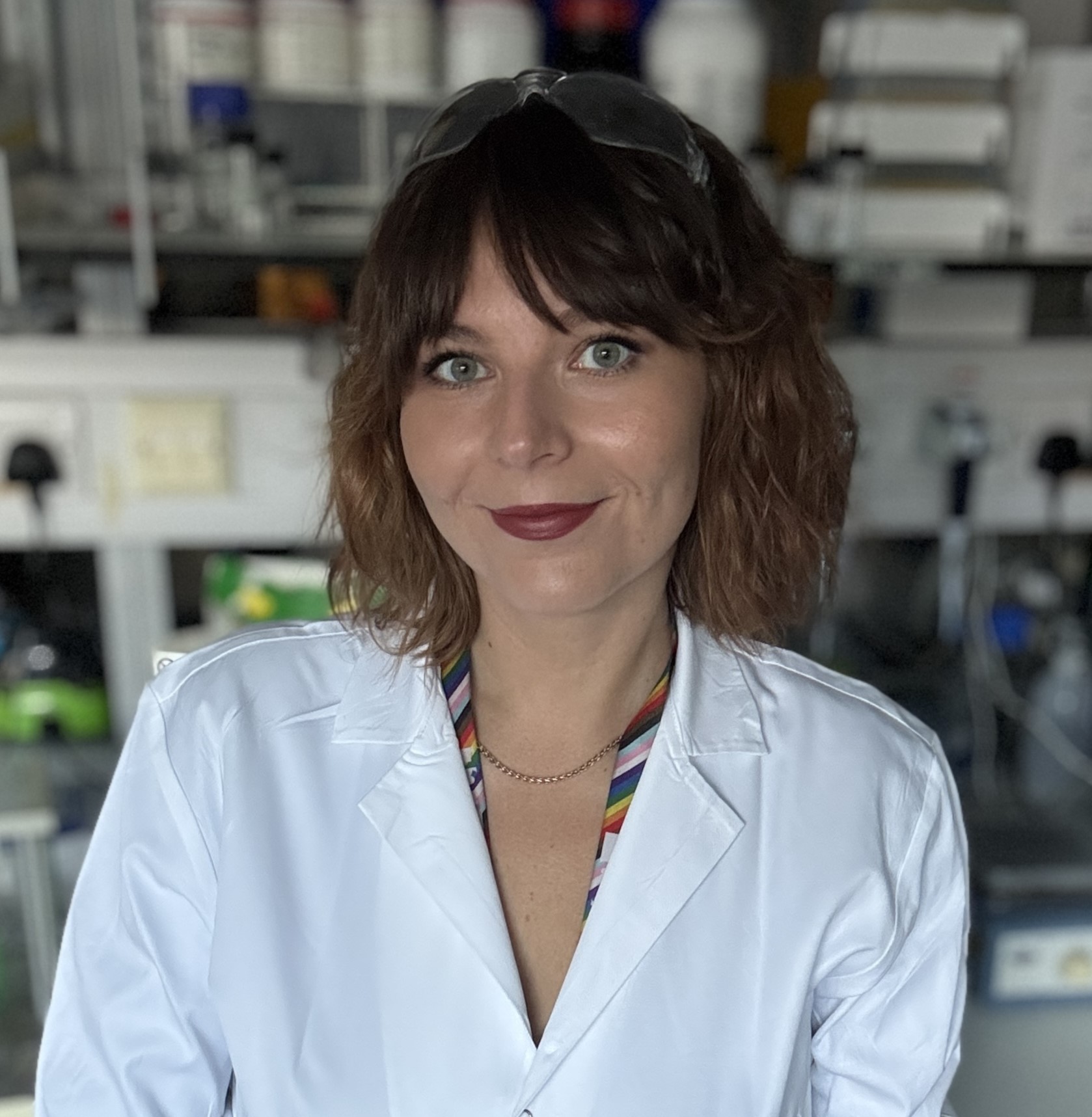
Sixty seconds with New Ideas researcher Dr Karolina Dziemidowicz
This month we funded 9 new childhood cancer research projects, marking our 10th anniversary of funding childhood cancer research.
The projects all focus on a ‘New Idea’ – an early idea that could one day change how children and young people with cancer are treated.
We spoke to Dr Karolina Dziemidowicz, pictured above, whose team at University College London is working on a way to deliver immunotherapy directly to brain tumours. Here’s what she told us.
What is your project about?
One of the biggest challenges in treating brain cancers, such as pontine diffuse midline glioma, is getting drugs to where they are most needed without causing too many side-effects. Our goal is to develop a smart gel loaded with medicines and CAR-T cells that can be safely injected directly into a brain tumour using a very fine tube.
Why is this research project important?
Pontine diffuse midline glioma is a cancer with very limited treatment options because of its nature and location in the brain. Many therapies have been tried, but they often fail in clinical trials. We hope that our research could make existing medicines better at doing their job.
How could your work eventually help children and young people with cancer?
Although this is an early-stage laboratory project, our research could support the delivery of innovative treatments, making them gentler and kinder to young patients. We are working together with clinicians and patients at Great Ormond Street Hospital to reach that goal as soon as we can.
How do you feel to have been awarded a New Ideas Grant as part of The Little Princess Trust's 10-year research funding anniversary?
It is a huge honour to be recognised by such a wonderful charity with a rich history of making the cancer journey more bearable to young patients. I can’t wait to roll up my sleeves in the lab!
Find out more about Karolina’s project here.
Latest Posts
How radiotherapy leaves changes in brain tumour cells that affect future treatments
Trying to improve treatments for children with high-risk neuroblastoma
Funding agreed to support nine bold new ideas
Funding research that 'few others will support'
How early stage research can have a lasting impact