

Little Princess Trust News
How radiotherapy leaves changes in brain tumour cells that affect future treatments
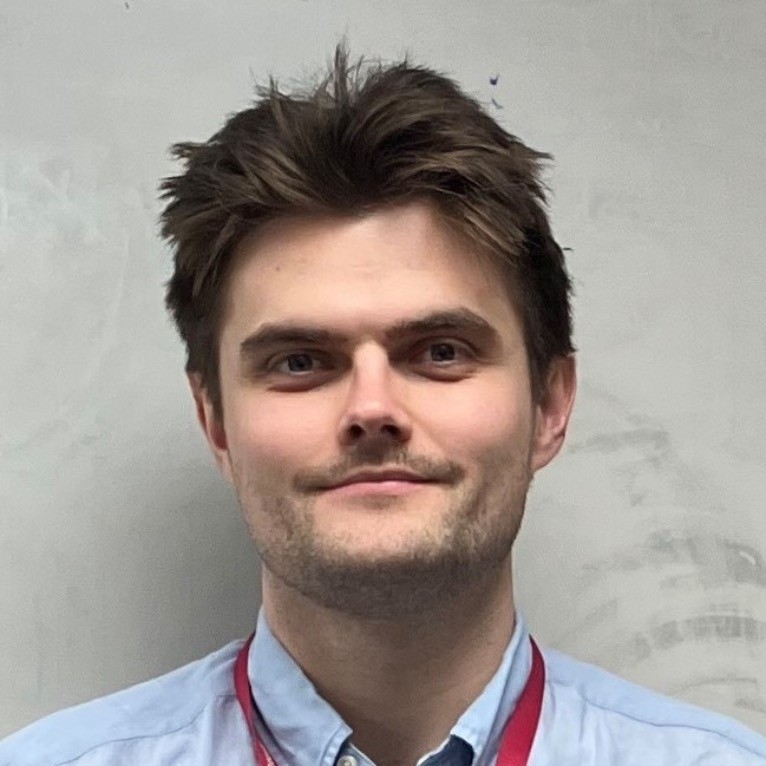
Sixty seconds with New Ideas researcher Dr Thomas Oliver
This month we funded 9 new childhood cancer research projects, marking our 10th anniversary of funding childhood cancer research.
The projects all focus on a ‘New Idea’ – an early idea that could one day change how children and young people with cancer are treated.
We spoke to Dr Thomas Oliver, pictured above. His team at University College London is investigating whether radiotherapy leaves lasting changes in brain tumour cells that affect how they respond to future treatments. Here’s what he told us.
What is your project about?
Every cell in our body contains an instruction manual to build new cells and maintain them. Sometimes mistakes find their way into these instructions as new copies are made. Most are fixed or unimportant.
However, rarely, uncorrected errors are left in a critical step in the manual that tells the cells carrying it to produce new abnormal cells very quickly. We call the mistakes ‘mutations’, and collections of these abnormal cells a ‘tumour’. Tumour cells, much like normal cells, continue to develop further mutations over time.
We are going to study the mutations found within an aggressive form of childhood brain tumour called diffuse midline glioma (DMG). Patients with this cancer are usually treated with radiotherapy, which kills most of the tumour cells, but not all of them.
It leaves some of the surviving cells with additional mutations, rather like scars. We want to know if these new errors are harmless, or if they create new instructions to resist other treatments patients receive.
Why is this research project important?
Although many treatments have been tested, there is currently no cure for DMG. However, patients taking part in trials of new medicines will often have received radiotherapy beforehand, or at the same time. The mutations caused by radiotherapy may partly explain why some of these trials haven’t worked.
How could your work eventually help children and young people with cancer?
If the theory is right, clinical trials could be designed to give new treatments before radiotherapy, when the tumour is more susceptible to them. This could improve their response to treatment.
Even if the radiotherapy mutations do not make tumours resistant to treatment, they might reveal other vulnerabilities that can be targeted by new drugs, given alongside radiotherapy.
How do you feel to have been awarded a New Ideas Grant as part of The Little Princess Trust's 10-year research funding anniversary?
Improving outcomes for children and young people with cancer requires innovation. However, few funding schemes exist that support bold research ideas at an early stage. I’m very grateful that we have been awarded a New Ideas Grant and to The Little Princess Trust for bridging this gap.
They have supported some remarkable and inspiring work over the last decade that has set the bar for what these grants can achieve. I’m looking forward to getting started and sharing what we discover.
Find out more about Thomas’ project here.